Thursday, September 05, 2013

Sydney bus drivers defy union, take wildcat action - IIPM Think Tank

A six-hour strike by 130 bus drivers in western Sydney on August 28, 2009, carried out in defiance of their union, produced furious denunciations in the media and from an industrial court judge. The drivers protested against the imposition of new timetables that imposed shorter time for routes.
Drivers said the timetables would force them to run late and that would be the cause of inconvenience to passengers. They would also be under pressure to drive over the speed limit. Months of trade union talks with the company failed to halt the onerous new conditions. Angered by the lack of support from the Transport Workers Union (TWU), the drivers conducted their own stoppages, giving no warning to the union or management. The TWU opposed the strike and intervened to end it.

The mass media launched a scathing attack on drivers for halting services from the depot during the morning peak hour. Drivers called it ‘sheer hypocrisy’ saying passengers were frequently left stranded due to delays caused by the already overstretched timetables.

The Busways Group, owning these buses, is a large private operator, holding lucrative government contracts to run more than 600 buses, and employs more than 700 drivers, on 100 routes across Sydney and New South Wales Central Coast regions. Click here to read full IIPM Editorial

Like us and read IIPM Think-Tank articles on facebook

Friday, July 26, 2013

Oppressed and angry

The trade union movement in India is about a century old. However, Indian trade unions have a shorter history in comparison with those in the United States and the United Kingdom. It was only in 1851 that the first modern factory – a cotton mill – was set up in Calcutta. This marked the industrial beginning in India, which progressed very slowly. It took another 50 years for the trade union movement to actually take a formal shape.

During 1877, the working and living conditions of workers were inhuman, and as a result they went on a strike protesting against such grim conditions. This was the first strike (recorded) at the Empress Mills in Nagpur (Maharashtra) over wage rates. Between 1882 and 1890, 25 strikes were recorded in Madras and Bombay presidencies. These strikes took place spontaneously, though there were no formal organisations of workers. Click here to read more..

Read More IIPM Related Articles
Zee Business Best B-School Survey 2012
Prof. Arindam Chaudhuri's Session at IMA Indore
IIPM IN FINANCIAL TIMES, UK. FEATURE OF THE WEEK
IIPM strong hold on Placement : 10000 Students Placed in last 5 year
IIPM's Management Consulting Arm-Planman Consulting
Professor Arindam Chaudhuri - A Man For The Society....
IIPM: Indian Institute of Planning and Management
IIPM makes business education truly global
Management Guru Arindam Chaudhuri
Rajita Chaudhuri-The New Age Woman
IIPM B-School Facebook Page
IIPM Global Exposure
IIPM Best B School India
IIPM B-School Detail
IIPM Links
IIPM : The B-School with a Human Face

Thursday, March 14, 2013

Bihar government has approached the World Bank for loan to train school teachers in the state.

Teacher training and development is fast emerging as a key area where more attention and emphasis is required to ensure the educational standards go further up in Indian colleges and universities. The west has a fairly long history in focusing on academia development and perhaps for the same reason considered as a Mecca for students. Many institutes in the United States and Europe have devised short-term courses in learning, teaching and assessment to equip the teaching staff with techniques that help them deliver better.

As Elizabeth Jones writes in Growing Teachers: Partnerships in Staff Development (1993): “Teachers learn about teaching and learning by playing the teacher script, observing what happens, and discussing all the possibilities with other teachers. In this process, they come to see themselves as people who know thereby people capable of making appropriate choices for themselves and for children.”

In Training Teachers: A Harvest of Theory and Practice (1994), Margie Carter and Deb Curtis refer to the need for teachers to examine their own filters – the experiences and conditioning they bring to a teaching situation as well as examining their roles and strategies to see what role they play in their interactions with children.

In the United Kingdom, more teachers are to be trained ‘on the job’ rather than in universities, as announced by education secretary Micheal Gove recently. “The impact of these changes on initial teacher training will be revolutionary,” said Gove. A study by Graham Gibbs of Oxford University and Martin Coffey of University of Leicester – to see the impact of training of university teachers on their teaching skills – concludes that training can indeed increase the extent to which they adopt student focus. “Training of university teachers is now established in every university in the United Kingdom, Norway and Sri Lanka and is becoming increasingly common in many other countries. Click here to read more...

Read More IIPM Related Articles
Zee Business Best B-School Survey 2012
Prof. Arindam Chaudhuri's Session at IMA Indore
IIPM IN FINANCIAL TIMES, UK. FEATURE OF THE WEEK
IIPM strong hold on Placement : 10000 Students Placed in last 5 year
IIPM's Management Consulting Arm-Planman Consulting
Professor Arindam Chaudhuri - A Man For The Society....
IIPM: Indian Institute of Planning and Management
IIPM makes business education truly global
Management Guru Arindam Chaudhuri
Rajita Chaudhuri-The New Age Woman
IIPM B-School Facebook Page
IIPM Global Exposure
IIPM Best B School India
IIPM B-School Detail
IIPM Links
IIPM : The B-School with a Human Face

Wednesday, February 06, 2013

Teaching is an art because each teacher has his or her own strength and own way to be effective.

Q. And, how can you gauge the effectiveness of the teacher?
A. We need to do simple and practical assessments of how students learn and by what processes they learn effectively. For instance, when Sesame Street started, the plan was to have people as instructors because it was believed that a focus on people would be more effective in creating learning amongst students. Since the people at Sesame Street were open to testing that question, they compared the engagement levels by replacing human beings with muppets. Contrary to their expectations, they found that a muppet was of much higher interest to students than people. Hence, we see all the famous muppets that are part of Sesame Street, like Big Bird and Elmo.

Q. Do you feel that curriculum today is an attraction to the youth or is there a change required to draw them towards making career in different fields?
A. Curriculum definitely needs to be changed. We need to modify it so that it has diversity built into it, which will enable people to learn in the ways that are most effective. With dynamic curricula, a teacher becomes an important practitioner who is helping to figure out the ways learning, goals and interests vary amongst students.

Q. What reforms in academia do you see as the need of the hour?
A. Most important – we need to move away from teaching everyone in one way and focus on how students learn effectively in different ways. I have worked with a number of schools and the most effective institutions have been the ones that deal with student differences. These are the schools that focus on each student and his or her most effective learning methods.

Q. Today best teaching and learning resources are available in English. Does language create a barrier between the seeker (not so proficient in English) and focus of knowledge on English? If yes, how can the teacher help?
A. There is research today that demonstrates that multilingual people are more flexible in their thinking skills. Evidence shows that they are more flexible and adaptable in their learning strategies. If teachers can honour different languages and build on the natural flexible thinking ability that comes from being multilingual, educationists can bridge this gap and take advantage of the cognitive flexibility that comes with being multilingual. Click here to read full interview...

Read More IIPM Related Articles
Zee Business Best B-School Survey 2012
Prof. Arindam Chaudhuri's Session at IMA Indore
IIPM IN FINANCIAL TIMES, UK. FEATURE OF THE WEEK
IIPM strong hold on Placement : 10000 Students Placed in last 5 year
IIPM's Management Consulting Arm-Planman Consulting
Professor Arindam Chaudhuri - A Man For The Society....
IIPM: Indian Institute of Planning and Management
IIPM makes business education truly global
Management Guru Arindam Chaudhuri
Rajita Chaudhuri-The New Age Woman
IIPM B-School Facebook Page
IIPM Global Exposure
IIPM Best B School India
IIPM B-School Detail
IIPM Links
IIPM : The B-School with a Human Face

Monday, January 14, 2013

Building the nation with teachers

Q. What are the factors that draw one towards teaching?
A. The factors keep changing at different levels of education. Unfortunately, school-level teaching is stereotyped as a woman’s job because handling young children is not considered to be a part of the male’s domain. Therefore, it is comparitively easier for women to get into the education sector.

The Sixth Central Pay Commission has made much difference in the higher education sector. Today, at an entry level, an assistant professor usually gets a salary, which is much better than what was in old days, absence of which acted as a filter then. People who believed in materialism did not join this sector.

Q. What does this role entail?
A. For many, teaching is not a preferred profession. However, to be in this sector one has to possess a firm belief in academics. It is not just about being in the world of books, but it entails thinking, sharing, the desire to teach and valuing feedback from learners. Poeple interested in research work often join the industry. Along with patience that research requires, there should be inspiration and desire to work.

If one aspires to be a school teacher, one needs to empathise with children and should be willing to work with them. People who are not very comfortable with children would not want to enter the profession. Training teachers programme can teach the maxium but senstivity towards with students’ need has to come from within. Click here to read more...

Read More IIPM Related Articles
Zee Business Best B-School Survey 2012
Prof. Arindam Chaudhuri's Session at IMA Indore
IIPM IN FINANCIAL TIMES, UK. FEATURE OF THE WEEK
IIPM strong hold on Placement : 10000 Students Placed in last 5 year
IIPM's Management Consulting Arm-Planman Consulting
Professor Arindam Chaudhuri - A Man For The Society....
IIPM: Indian Institute of Planning and Management
IIPM makes business education truly global
Management Guru Arindam Chaudhuri
Rajita Chaudhuri-The New Age Woman
IIPM B-School Facebook Page
IIPM Global Exposure
IIPM Best B School India
IIPM B-School Detail
IIPM Links
IIPM : The B-School with a Human Face

Friday, January 11, 2013

Quality is the best policy

Q. What was the thought process behind the brand ‘Rockland’?  
A. We started with the vision of building Rockland as the most trusted healthcare brand nationally and internationally. Our aim was to provide quality services at the most reasonable rates. Establishing a brand is a gradual, tenuous process that requires perseverance, respect for people and high quality standardised services.

Q. Has Rockland been able to meet the requirements of its customers and employees? How correct is the perception that private hospitals are too expensive today? 
A. Rockland has not only been innovative in providing world-class facilities to its customers but also in providing a healthy work environment to its employees. A secure environment that ensures growth of the individual employee through training and other programmes also helps the organisation grow. We lay emphasis on the need to attract and retain our employees for a long period of time. Click here to read full interview...

Read More IIPM Related Articles
Zee Business Best B-School Survey 2012
Prof. Arindam Chaudhuri's Session at IMA Indore
IIPM IN FINANCIAL TIMES, UK. FEATURE OF THE WEEK
IIPM strong hold on Placement : 10000 Students Placed in last 5 year
IIPM's Management Consulting Arm-Planman Consulting
Professor Arindam Chaudhuri - A Man For The Society....
IIPM: Indian Institute of Planning and Management
IIPM makes business education truly global
Management Guru Arindam Chaudhuri
Rajita Chaudhuri-The New Age Woman
IIPM B-School Facebook Page
IIPM Global Exposure
IIPM Best B School India
IIPM B-School Detail
IIPM Links
IIPM : The B-School with a Human Face

Thursday, December 06, 2012

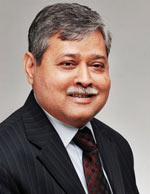
Dr. Prakash V Bhide [President – Corporate HR, JK Organization (E.Z.)] has an inherent zeal for transforming the lives for a better tomorrow. He shares with Schweta Chaturvedi the growth path he has chalked out for his people and The HR practices at the over 100-year-old establishment

“I took it up as the future looked full of opportunities. I had the chance to go to the top 20 and be a part of the board from the 6 or 7,000 employees. This marked the beginning of Dr. Bhide’s successful career in HR.

Reminiscing his initial days, he says: “I still remember I used to prepare questionnaires and go to HR Heads of organisations such as Phillips and HUL, and ask them to share their views.” Later, to supplement practical knowledge, Dr. Bhide did his doctorate in HR. Talk of all the years he had spent in HR, Dr. Bhide believes men are more complex than machines. “This field has taught me that there are different people with different aspirations and so are their issues. Also, people behave differently as individuals as compared to when in a group. So handling HR is a much challenging job.

Linking HR to business, Dr. Bhide emphasises on the contribution of HR to business. “Today, the first thing I see is that my HR group contributes to business.” It is important to love your business first. HR should have equally good understanding of other functions like marketing and finance. In other words, they should have a good commercial and and financial sense, and should not be confined to HR. If one wants to understand the challenges, one has to have in-depth knowledge about business and general issues, the economy, land acquisition and other related issues. HR people are perceived as theoreticians and not practical. One has to be practical; for this you may not have to be rigid on everything. You have to see what works. Read more..

Read More IIPM Related Articles
Zee Business Best B-School Survey 2012
Prof. Arindam Chaudhuri's Session at IMA Indore
IIPM IN FINANCIAL TIMES, UK. FEATURE OF THE WEEK
IIPM strong hold on Placement : 10000 Students Placed in last 5 year
IIPM's Management Consulting Arm-Planman Consulting
Professor Arindam Chaudhuri - A Man For The Society....
IIPM: Indian Institute of Planning and Management
IIPM makes business education truly global
Management Guru Arindam Chaudhuri
Rajita Chaudhuri-The New Age Woman
IIPM B-School Facebook Page
IIPM Global Exposure
IIPM Best B School India
IIPM B-School Detail
IIPM Links
IIPM : The B-School with a Human Face

Monday, November 26, 2012

Eileen Crawley (Trainer, Consultant, HRM Specialist Crawley & Canovas, Malaysia) says self-knowledge is important for any change scenario

Q. Define effective recruitment and retention strategies.
A.
Identify and select an internal change management team in collaboration with new partners in the company. Reaffirm the positions of the heads of business units you intend to retain.

Include these in your change planning and management activities and ensure their participation to ensure buy-in. Recruit heads of new units from outside if they have a unique skill set.

Q. Do you see a need for HR to identify internal loopholes? What could be the probable faults that it may come across?
A.
Self-knowledge is important for any change scenario. Information on excellent subordinates may have been hidden by managers who wish to retain their own status. Individuals may use the change scenario for their personal benefit and over-emphasise their abilities, whereas less confident ones may underestimate their strengths. Here, outside consultants should be used to re-evaluate staff before redundancy decisions are made.

Q. How can HR effectively deal with the leadership change?
A.
HR should not introduce new senior people to the existing competent staff and should focus on internal promotion strategies, wherever possible. It should select new leaders willing to take time to develop relationships with the existing staff and thus build confidence and support for the change. HR should select employees who are positive about the new vision and change programme to lead the transition. Read more...

Thursday, November 01, 2012

The wow Bandwagon!

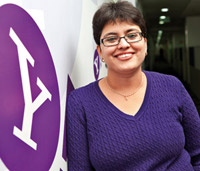
Passionate about linking strategy and HR and translating this into measurable delivered results, Ms. Aparna Ballakur has over 15 years of experience with companies such as Adobe Systems, McAfee Software and Sasken Communications. After B.E. from the University of Mysore, she has completed an Executive Leadership Program from Cornell University and the Strategic Human Resources program from the Stanford Graduate School of Business.

Q. What drew you towards HR? Also, share your experience working with companies like Adobe and McAfee.
A. I started my career as an R&D engineer and entering into HR was a stroke of serendipity. I chose to stay on because I enjoyed the work and the learning that came along. What caught my attention was that there is a lot of functional expertise within the HR which a lot of people outside the profession are not aware of.

My experience in the two companies was very different. McAfee – my first company – gave me experience and understanding of what it meant to work in a multinational environment. They were just starting their operations in India when I joined; there I got an opportunity to build the R&D centre.

At Adobe, I was managing India and China operations. I got an opportunity to set up the centre in China and learnt how things work there. Culturally, both the nations are very different.

Q. How can you ensure a worldclass HR organisation?
A. Factors that contribute to make a world-class HR organisation are:
• To build the best possible HR team – Talented people are key to enable rapid growth of the organisation or managing change effectively.
• Aligning it very closely to the business – A world-class team needs to have a deep understanding of the business and serve as business partners. It is HR’s responsibility to help business leaders understand how people-related issues impact results.
• Flawless execution – Flawless execution beats everything else. From a strategic perspective, the prime focus for the teams should be on partnering with all stakeholder in the organisation towards building people and organisational capability. From an operational execution perspective, the focus should be on streamlining the efficiency and effectiveness of HR delivery with all stakeholder.
• Minimal dissonance between stated and unstated culture – Against the common notion, I believe that HR alone is not the custodian of the culture. Culture preservation is everyone’s responsibility and each and every employee needs to embody that. At best, a world-class HR organisation can minimise the dissonance between the stated and unstated culture. It can influence and reinforce the stated culture of the organisation through processes, policies or recognition of certain behaviours and coaching leaders to ensure the stated culture is the real culture.

Q. How does Yahoo! retain its top employees?
A. At Yahoo! we settle for nothing less than an addictive combination of work, opportunity and workplace, or ‘WOW’, as we call it. The ‘work’ we do is fun, since we build cool stuff that impacts over 700 million users on the internet. I think the ability to touch millions of people across the world on a daily basis continues to be one of the most appealing aspect. Our employees get the ‘opportunity’ to work on bleeding edge innovation, alongside some of the best minds in the business. The opportunity that we give to our employees is our USP. We have created a work environment that is flexible, open and conducive to building a diverse and inclusive workforce. Click here to read more...

Read More IIPM Related Articles
Zee Business Best B-School Survey 2012
Prof. Arindam Chaudhuri's Session at IMA Indore
IIPM IN FINANCIAL TIMES, UK. FEATURE OF THE WEEK
IIPM strong hold on Placement : 10000 Students Placed in last 5 year
IIPM's Management Consulting Arm-Planman Consulting
Professor Arindam Chaudhuri - A Man For The Society....
IIPM: Indian Institute of Planning and Management
IIPM makes business education truly global
Management Guru Arindam Chaudhuri
Rajita Chaudhuri-The New Age Woman
IIPM B-School Facebook Page
IIPM Global Exposure
IIPM Best B School India
IIPM B-School Detail
IIPM Links
IIPM : The B-School with a Human Face

Thursday, October 25, 2012

More Sharing ServicesShare | Share on facebookShare on myspaceShare on googleShare on twitter Engage your employees to counter pull for talent

Q. How would you describe your experience with Accor?
A. It has been an outstanding, elevating, energising, and exciting journey. One of Accor’s core values is the ‘Spirit of Conquest’ and my journey so far exemplifies this to the core. An outstanding feature of the journey so far has been to experience, imbibe,and replicate the Accor culture in our properties.

Q. What are the major HR challenges in hospitality sector?
A. It is talent. There is an urgent need to diversify the sources of talent to include relatively non-traditional markets and to ensure better and more sustainable quality. Apart, employee have more diversified options today, the pull for talent by competition is severe and can destabilise organisations. There is a need to understand what motivates and engages employees in order to help talent retention.

Q. What are current HR trends?
A. The increasing realisation that the biggest barrier to an effective and sustained HR role is the socio-economic cultural factors that shape personality which impacts the organisational capability. I believe that emotional and spiritual intelligence play a significant role in offloading obsolete HR practices that enable transformation of personalities and character traits. Click here to read full interview...

Read More IIPM Related Articles
Zee Business Best B-School Survey 2012
Prof. Arindam Chaudhuri's Session at IMA Indore
IIPM IN FINANCIAL TIMES, UK. FEATURE OF THE WEEK
IIPM strong hold on Placement : 10000 Students Placed in last 5 year
IIPM's Management Consulting Arm-Planman Consulting
Professor Arindam Chaudhuri - A Man For The Society....
IIPM: Indian Institute of Planning and Management
IIPM makes business education truly global
Management Guru Arindam Chaudhuri
Rajita Chaudhuri-The New Age Woman
IIPM B-School Facebook Page
IIPM Global Exposure
IIPM Best B School India
IIPM B-School Detail
IIPM Links
IIPM : The B-School with a Human Face

Wednesday, October 17, 2012

I was not very good at thinking quickly about simple things - Prof. Aaron Ahuvia

Q. You have talked about social norms impacting the way markets operate. Is this a particularly significant factor in India, a traditionally conservative market?
A. Social norms are incredibly powerful in explaining people’s behaviours everywhere, but are slightly more powerful in traditional or socially conservative cultures. But the big difference in traditional cultures is that many people there are not surprised to learn that they are powerful; it is a part of life and they are aware of it. On the other hand, many Western cultures believe in the ideology of people being true to themselves without giving in to peer pressure; they tend to deceive themselves into thinking ‘I will do what I think is right’, which is non-sensible. So I think there is more self-awareness in traditional cultures.

Q. What is the relevance of social marketing to India?
A. There are a lot of efforts on to promote social issues in India, and I think this has huge potential. For a long time, advertising attempted to simply persuade people to change their behaviour. While this method can be effective in some situations, it is often very hard. We now have lots of examples of people finding creative ways to get behaviour to change voluntarily. To be able to do that involves telling others what they should be doing, rather than just communicating a message. Click here to read full Inverview....

Read More IIPM Related Articles
Zee Business Best B-School Survey 2012
Prof. Arindam Chaudhuri's Session at IMA Indore
IIPM IN FINANCIAL TIMES, UK. FEATURE OF THE WEEK
IIPM strong hold on Placement : 10000 Students Placed in last 5 year
IIPM's Management Consulting Arm-Planman Consulting
Professor Arindam Chaudhuri - A Man For The Society....
IIPM: Indian Institute of Planning and Management
IIPM makes business education truly global
Management Guru Arindam Chaudhuri
Rajita Chaudhuri-The New Age Woman
IIPM B-School Facebook Page
IIPM Global Exposure
IIPM Best B School India
IIPM B-School Detail
IIPM Links
IIPM : The B-School with a Human Face

Monday, October 15, 2012

Gurus of HR

More Than HR Global (MTHRG), a rapidly growing body of HR professionals celebrated its 10th anniversary in April this year.As part of the celebrations, it organised a number of surprises for the HR community. One of them was the line-up of international gurus for a series of lectures in Mumbai and Bengaluru.

Bob Urichuck’s seminar ‘Up Your Bottom Line,’ was presented by MTHRG and Right Selection Group in Mumbai on 29th April and in Bengaluru on 30th April. The Human Factor magazine was the partner for the events.

The guest keynote speaker at Mumbai was Walter Vieira, described by Philip Kotler as one of ‘the best speakers on Marketing in Asia’. Overlaying contemporary marketing lessons on proven marketing knowledge, Walter from his 25 years of experience offered rich insights into new concepts and developments in HR. He shared real-life cases and examples on topics that included Customer Value, Cost to the Customer, Convenience, and Communication. Click her to read more....

Read More IIPM Related Articles
Zee Business Best B-School Survey 2012
Prof. Arindam Chaudhuri's Session at IMA Indore
IIPM IN FINANCIAL TIMES, UK. FEATURE OF THE WEEK
IIPM strong hold on Placement : 10000 Students Placed in last 5 year
IIPM's Management Consulting Arm-Planman Consulting
Professor Arindam Chaudhuri - A Man For The Society....
IIPM: Indian Institute of Planning and Management
IIPM makes business education truly global
Management Guru Arindam Chaudhuri
Rajita Chaudhuri-The New Age Woman
IIPM B-School Facebook Page
IIPM Global Exposure
IIPM Best B School India
IIPM B-School Detail
IIPM Links
IIPM : The B-School with a Human Face

Thursday, October 11, 2012

She Writes Story Contest winner: Prarthana Rao

Prarthana Rao is one of twelve winners of the MSN-Random House She Writes a Story Contest', as chosen by our judges. Her story 'Spaces' features in the 'She Writes: A collection of Short Stories' published by Random House India and available at all leading bookstores.


Prarthana Rao was born and raised in Chennai. After her schooling at Bhavan's Rajaji Vidyashram, she completedB.Sc. Visual Communication from Loyola College, followed by a Masters in International Studies from Stella Maris College, securing gold medals in both courses. She has worked as a freelance content and copywriter and has dabbled in acting and scriptwriting as well. She has been writing short stories, poetry, non-fiction, and just about anything since the age of six. Prarthana enjoys music, movies and yes, books.


read an extract from prarthana rao's story 'spaces'

She raced down the keerai patch, ducking under the low-hanging mango tree branch with the heavy green mangoes, the smell of summer briefly intoxicating her. Lifting up her paavaadai around her ankles, Kausalya swerved around the hibiscus bushes and padded through the freshly-watered earth, finally halting at the front steps of the veranda. She stared aghast at the pairs of slippers lined outside-one, two, three pairs-and a pair of men's formal shoes, the kind she had never seen before. Her heart sank. She knew what this meant. Kausalya turned to the east and looked at the horizon, in the direction of the comforting sound of the restless, relentless surge of the sea, the sound that had cradled her since she had been born.

Trishna slammed the front door loudly, but to no avail. Her parents were still at work-her mother had instructed her to heat up the afternoon's left over bhindi, dal, and rotis in the microwave. Yuck. Too much of watching Junior Masterchef made her wish she had a couple of young slaves to whip up a risotto or a Thai red curry for her. She rolled her eyes at the framed photographs of her family that adorned their Dulux blue-and-white patterned living-room wall. She could almost hear her mother saying that she would have to learn to cook all these things and more since she was going to go abroad to study soon enough. She gazed at the pictures-moments frozen in time of her older brother and her making silly faces in the midst of some adventure or the other. Then there was another picture of her father and mother gazing at each other in love during their early marriage days.

She knew all these stories by heart, much as she pretended she was bored of them. Who was she without them?

The wedding was a grand affair-an elaborate and ornate ceremony at the Kapaleeshwar temple and a stately reception at the Dharmaprakash Kalyana Mandapam opposite Dasaprakash hotel. Kausalya would repeat that one single detail to herself in the years to follow, about it being grand. Whether it was repeatedly drilled into her by her grandparents or whether it was a description she had formulated herself, she could never recall exactly. Sometimes a statement repeated and repeated becomes a memory. All she could remember were fleeting moments of sensations-the rustling of heavy pattu saris; the orange-gold fire that bore witness to her marriage; the weight of the gold around her neck; the first taste of sambhar-saadam after hours of standing hungry and greeting guests; the soapy smell of her husband's neck that both soothed and terrified her when he put his arms around her for the first time. But the only sound she longed to hear was the sound of sea waves. The only fragrance she longed to sniff was the smell of the freshly-watered earth. The only taste she wanted to savour was the sour, tongue-tingling tang of nellikaais picked straight from the tree.

in her own words: prarthana rao

Have you always been a writer? What made you start writing?
Writing has almost been like breathing to me. I don't recall a time when I wasn't poised with a pen in hand and with a feverish excitement on seeing a blank sheet of paper. My earliest 'works' were Enid Blyton/Goosebumps/Sweet Valley Kids-inspired tales of fairies and talking animals and witches and little children who made mistakes but soon learnt the error of their ways. My first 'book' was 'published' when I was six by my father who wrapped my sketch pen-scrawled story and illustration-filled notebook with brightly coloured gift wrapping paper. My parents were always both extremely creative so I was always encouraged, even if it meant I ended up staying up late at night, scribbling and scribbling spoofs and scripts and songs.

What inspired you to enter She Writes?
I caught sight of the contest announcement and was intrigued by the creative possibilities offered by the topics. With the topics offered and the given quotes to be used in the story, it seemed like an exciting challenge. I had been working on my novel for some time and needed a break to get a fresh perspective. Writing for the contest came naturally-it wasn't a conscious decision. It felt like a wonderful outlet for the myriad thoughts I had been having. I was simply happy to write something for an audience because I hadn't shared any of my fiction work with anyone in a very long time. The possibility of winning the contest hadn't even occurred to me. I was just glad that I had tried. In fact, it was my mother who really motivated me at the last minute. So it's all thanks to her that I am here answering these questions.

Why did you choose the category you did?
I was tempted to write something for each topic but 'Growing up in India' was a concept I really wanted to talk about and share with the world as well as explore within myself. Having been born and raised in Madras/Chennai, I felt inclined to narrate the palette of emotions and ideas that come from having been so accustomed to one place, especially one distinctive, strongly-flavoured Indian city. To write about it felt like the ideal opportunity to step outside my Chennai-coloured soul and look at what it really means to belong to a place. Also I was going through an extremely tough phase of my life as I had just lost my father whom I was very close to. So it was almost cathartic to analyse what 'home' really means-whether it signified a person, a house, a city, a country or just an intangible stirring in the heart for something you never really understand.

Do you have a writing routine - e.g. do you have favourite places to write/favourite times of day/do you write longhand or on a computer?
I was nocturnal for the longest possible time and so I can wax eloquent on the subject of nighttime writing routines-the peace and quiet, your thoughts sharing space with the screeches of bats and owls. I also used to think I had writer's block when it came to fiction. Having been recently converted to the beauty of a disciplined diurnal routine, I must say that writing can flow from hand to pen to paper (or keyboard to screen) at any time. I do love the electric surge when hand holds pen and pen makes marks on paper. Writing longhand is an intensely intimate experience that I always prefer. But I thank God for Word and all its amazing facilities. I do enjoy how one's thoughts become so legitimate and structured when typed. I sometimes write longhand first and then transcribe onto the computer. Tedious but extremely satisfying. When the story takes hold of you, and your characters want to talk (or cry or scream), there is little that can hold them back. Unless of course, you are stuck in the middle of a traffic jam. Not advisable to write then.

Who is your favourite author?
My choices in literature are so eclectic and varied to a point where I am utterly open to any form of writing (including snack wrappers and mosquito net provider's flyers). I thoroughly soak up the works of Jhumpa Lahiri, Truman Capote, Anuja Chauhan, Elizabeth Gilbert, Chetan Bhagat, Elif Shafak, Khaled Hosseini, Margaret Mitchell's 'Gone with the Wind', Barack Obama's 'Dreams from my Father', young adult fiction by Ann Brashares and Meg Cabot, philosophy by Paulo Coelho, poetry by Kahlil Gibran, and of course, J.K. Rowling.

Which book has inspired you the most?

As a writer and a reader, I am deeply entranced by the language of Jhumpa Lahiri, especially in her short stories. The characters of Ann Brashares' books, the humour and wit of Anuja Chauhan and Elizabeth Gilbert, 'Harry Potter', not just for J. K. Rowling's imaginative creations but also for her acute understanding of the human heart. 'Gone with the Wind' was another book, a classic that I put off reading for the longest time but when I began reading I could not put it down-so swept away was I by this utterly timeless, magnificently sketched epic historical tale which managed to express the trivialities and depth of the human soul as well. I thoroughly enjoy being inspired by autobiographies like Frank McCourt's books and historical fiction as well. I think what draws me to a book are strongly etched characters, a sense of time and place and a big, warm soul-filled story.

Which key piece of advice would you give to any other budding writer?
Be open to life. Observe. Learn. Ask questions. Read anything and everything. Keep writing. Write for yourself, as yourself. Writing shouldn't be a hobby; it should be an unstoppable need.

Wednesday, October 10, 2012

Going Strong at Ten

Powered by a group of six young HR professionals, More Than HR Global (MTHR Global) is a rapidly growing knowledge movement in Mumbai. The core purpose of MTHR Global is to impact the HR profession by expanding the professionals’ knowledge base.

MTHR’s founders are Mr. Rajesh Kamath, Principal Consultant – L&D, Cerebrus Consultants; Mr. Ashish
Gakrey, People Relationship Management, Capgemini India; Mr. Rajesh Gupta, DGM - Human Capital, Future Generali India Life Insurance and Mr. Vipul Agarwal, Director, Zend Consulting Services, with committee members, Ms. Preeti Malhotra, Head - HR, Prabhudas Lilladher Pvt. Ltd. and Mr. Keyur Jani, AM – HR, Deloitte.

On its 10th anniversary, MTHR organised a number of lectures in various cities of the country for the benefit of the HR community. The latest in the series of lectures were held in Pune, Bengaluru and Mumbai.

The event in Pune was held on the 24th of May. It consisted of a series of lectures on the theme, “Nurturing Geniuses: From Classroom to Boardroom”. Dr. Anil Khandelwal, author, mentor and ex-CMD, Bank of Baroda, delivered a lecture on the value of being authentic in HR. He said that organisations should practice authentic communications and treat employees as customers. Prof. Ranjan Das, Strategy Guru, IIM-C, made the point that, HR is not getting its due respect, while Finance and Marketing dominate too much by speaking the language of business. While, ACP Dhanraj Vanzari of Mumbai Police spoke about Situational Leadership. He said that situations make a leader out of a person and cited the example of Tukaram Ombale, who laid down his life during the 26/11 attacks. Read More


Monday, October 08, 2012

Indian firms more so!

CEOs have ripped apart shareholders’ wealth globally under the guise of M&As; Indian firms more so! B&E’s Manish K. Pandey, Deepak R. Patra and Karan Mehrishi undertake the most radical analysis of the recent past and destroy age-old perceptions!

But Indians, as we said before, never learn! But hey, isn’t India too supposed to grow on the back of mega-merger deals? Isn’t L. N. Mittal, who succeeded in merging his company with Arcelor (the world’s largest steel corporation), the new purveyor of the rise of Indians? Aren’t flamboyant Indian companies like Tata Steel, Suzlon, Aditya Birla Nuvo, GMR Infra, TCS, Ranbaxy, Apollo, Videocon, ONGC and many more – which have accounted for multi billion dollar M&A deals in the last three years while taking over foreign and domestic corporations – sparkling benchmarks of corporate excellence?

And what about the paeans being sung in the praise of indisputable leaders like Tata Coffee (which bought off 30% of Energy Brands Corporation in the US for an unbelievable $677 million), Dr. Reddy’s Labs (which snapped up Germany’s Betapharm for a gigantic $576 million), Ranbaxy (which gobbled up Terapia of Romania for a smothering $324 million) and innumerable more? Are we simply supposed to believe that most of these Indian M&A deals are, er, stupid? Considering shareholder value, revenue growth, cost synergies, and almost everything a company could have stood for, the answer is yes!

We started with the May 2008 BCG report (The Return of the Strategist) where this former supporter of M&As confirms, “The key question is not whether deal volumes and values will fall or rise, but whether it is still [ever] possible to generate [any] value from [M&A] transactions!... More than half of mergers destroy value for acquirers’ shareholders!” The May 2007 research (Why M&A Deals Are Bad For Shareholders) of the motherlode of all institutions, HBS, quotes, “Most M&A deals destroy shareholder value!”

How has the thinking been a few years back? The April 2004 HBS paper (Should We Brace Ourselves For Another Era Of M&A Value Destruction?) states eloquently, “In the end, M&A is a flawed process, invented by brokers, lawyers and CEOs with super-sized egos!” MarkSirower, author of the famous book Synergy Trap, shows how, on an average, 2/3rds of all deals end up destroying shareholder value. Even the famed McKinsey, once a fanatic supporter of M&As, had to accept that in the US & UK, only one quarter of all M&As even recovered the merger costs.

Their November 2001 hallmark paper (Why Mergers Fail) stated prophetically, “The belief that mergers drive revenue growth could be a myth!” In that paper, McKinsey showed how a massive 78% of companies failed to manage significant growth over a period of three years post the M&A! Professors Weber and Camerer of Carnegie Mellon University, in April 2003, statistically showed in their benchmark thesis (Merger Failure...) that “a majority of corporate mergers fail!” The Economist reported in 1999,“Study after study has shown that 2/3rd of all deals haven’t worked!” CEO Magazine reported similarly, “75% of M&As are disappointing or outright failures!” BCG’s sparkling July 2007 report, The Brave New World of M&As, documents, “Larger deals destroy progressively more value!... Deals that are above $1 billion destroy nearly twice as much value as those under $1 billion!” The hugely referenced Business Strategy Review‘s 2005 paper (Merging on the Miraculous) had the first line, “More than 2/3 M&As fail to create meaningful shareholder value.” The Gartner/Forbes Executive Survey of February 2007 asked top global executives to rank various business issues. ‘Managing M&As’ came last on the 25 factor list! Factors like ‘Attracting and retaining skilled workers’, ‘attracting new customers’, ‘Increasing market share’ etc. were ranked miles above M&As! The Economist Intelligence Unit’s outstanding briefing (Corporate Priorities For 2007) goes better! When more than 1,000 global CEOs were asked, “Which forces will have the greatest impact on the global marketplace in the coming 3 years?,” they ranked ‘M&A activity’ sixth from the bottom! Hilariously, below this were only factors like ‘Catastrophic events (eg. terrorism, natural disasters)’, ‘Advances in back office technologies’, and of course, ‘Others’.

The NYSE CEO Report 2008 put the final nail in the M&A coffin by giving the empirical evidence that “most CEOs think revenue growth in their own companies will be driven far more from organic growth than M&A activity!” It also shows how there is a direct correlation between organic growth and a company’s market capitalisation! Global M&A deals touched $4.48 trillion in 2007 (from $3.61 trillion in 2006); Indian deals touched $51.11 billion in 2007 (from $20.30 billion in 2006).


Source : IIPM Editorial, 2012.

For More IIPM Info, Visit below mentioned IIPM articles.

 
IIPM : The B-School with a Human Face

Saturday, October 06, 2012

We’re Doomed!

If This is the Best The US has Against us, The World is...!

It’s amazing how one woman, who apparently could well become the next Republican presidential candidate, has the capacity to continuously churn out one gaffe after another, giving fright-nights to global leaders about the fact that the lady lacks factual command of international issues and might even bomb the wrong nation one fine day. Here’s a look at some of her rib-tickling output:

October 1, 2008: In an interview with Katie Couric of CBS News, she was asked to name a few newspapers she reads. Unable to name any, she said, “All of ‘em, any of ‘em that have been in front of me over all these years.”

November 5, 2008: In an interview in Fox News, she said, “We spend a lot of time talking about Africa, as we should. Africa is a nation that suffers from incredible diseases.”

July 18, 2010: “Ground Zero Mosque supporters: doesn’t it stab you in the heart, as it does ours throughout the heartland? Peaceful Muslims, pls refudiate,” Palin tweeted, inventing a new English word.

November 22, 2010: In an interview with Sean Hannity, she commented on her role to media, “I want to help clean up the state that is so sorry today of journalism... I have a communications degree.”

November 24, 2010: In an interview on Glenn Beck’s radio show, commenting on the Korean tension, “But obviously, we’ve got to stand with our North Korean allies.” Later, she corrected herself.


Source : IIPM Editorial, 2012.

For More IIPM Info, Visit below mentioned IIPM articles.

 
IIPM : The B-School with a Human Face

Friday, October 05, 2012

Methodology

A Quick Run Through the Two Phases of The 2010 B&E-ICMR B-School Survey

First phase:
ICMR prepared an initial list of 200 B-schools in India that have been providing full-time management courses for at least the past three years and which were also the most-recalled amongst the student fraternity (sample size of 2050 students who are currently pursuing a management course, spread across five metros). This initial list of B-schools comprised both private and government-affiliated institutions. Subsequently, ICMR conducted a perception survey amongst MBA aspirants, management students (who are currently pursuing their MBA) and executives from the corporate world. The survey was based on the parameters of awareness, recall, legacy and image & perception. A sample of 5500 respondents was thus covered in the study across the cities of Delhi, Mumbai, Kolkata, Bangalore, Chennai, Pune, Hyderabad and Ahmedabad, using a structured questionnaire. Based on the frequency of responses, the final list of top 30 B-schools (from amongst the initial list comprising 200 B-schools) was shortlisted.

Second Phase:

The final ranking was based on the average of weighted scores per parameter (details below) given by the esteemed panel of experts. The respected panel of experts comprised Naresh Gupta (MD, Adobe India), Girish G. Vaidya (Director, Infosys Leadership Institute), V. Balakrishnan (CFO, Infosys Technologies), Dr. Brian W. Tempest (Former CEO, Ranbaxy & current Chairman, Religare Hichens & Harrison Plc. & Chairman, Advisory Board of Lancaster University Management School, UK), Dr. Wilfried Aulbur, (MD & CEO, Mercedes-Benz India), Dhiraj Mathur, (Executive Director, PWC), Sandeep Aneja (MD, Kaizen Private Equity), Michael Boneham (President & MD, Ford India), Capt. G. R. Gopinath (Former CMD, Air Deccan & current CMD of Deccan 360), Gautam Dutta (CEO, PVR Cinemedia), K. M. Nanaiah (MD, Piney Bowes India), Neetasha Joshi (Head – HR, Tata AIG Life Insurance), Brian J. Manning (President & MD CSC India), Alok Bhardwaj (Senior VP, Canon India), Danish Khan (Head – Marketing, Sony Entertainment), Sumeet Nair (Chairperson, Fashion Foundation of India), Subrata Dutta (CEO, Samsonite), Mehmood Khan (Founder President, IIM Alumni Europe), Ranjana Smetacek (Director – Marketing, Fortis & Escorts Group), Pankaj Dubey (National Business Head, Yamaha India). Each panelist was provided with the write-ups (sent by the participating B-school) and detailed secondary data generated by ICMR for the 30 institutes based on the following parameters:

1. Quality & Volume of Course Contents; weightage:40%
2.Quality & Volume of Industry Interface; weightage:15%
3. Quality & Volume of Research & Writings; weightage:15%
4. Quality & Volume of Global Exposure; weightage:15%
5. Placement & Packages; weightage:15%

It is important to note here the weights given to the parameters in question. We firmly believe that the most important factor for any B-school to be ranked upon has to be necessarily its course contents. This factor is what differentiates the world’s leading management institutions from the also-rans. No amount of teaching, interface, exposure is helpful unless the course structure is world class – and that is the reason why this factor has been given a 40% weight by us, while all the other factors have been assigned a weight of only 15%.


Source : IIPM Editorial, 2012.
For More IIPM Info, Visit below mentioned IIPM articles.
 
IIPM : The B-School with a Human Face

Monday, September 10, 2012

“The few defaults are due to Migration & Natural Calamities”

M. R. Rao, CEO, SKS Microfinance Ltd.

Launched in 1998, SKS Microfinance is one of the fastest growing Micro Financial Institutions (MFIs) in the world, which has served more than 5 million women members in poor regions of India till date. Of course, the company has been in the news for the wrong reasons following the unceremonious exit of its ex-CEO Suresh Gurumani. Current CEO M. R. Rao talks about the company’s business model and challenges it faces:

B&E: Tell us about SKS’ entire delivery mechanism. What are your other major business growth drivers?
MR:
SKS targets the poor and upper poor class. The upper poor class consists of families earning Rs.25,000-Rs.50,000 per annum like medium farmers, small entrepreneurs and families falling just above poverty line like landless laborers. This is the segment of the poor that can most benefit from microfinance. Overall, SKS’ target constitutes of rural (74%) and urban (26%). Through its NGO, Swayam Krishi Sangam, SKS works with the ultra poor or the destitute who need far more intense involvement and a kind of spoon feeding to nurture them and make them use their loans effectively. SKS provides the ultra poor with vocational training, social awareness and health awareness over an 18-month period and also provides these families with assets, which they are taught to manage.

Apart from income generating loans, SKS also offers insurance products jointly with Bajaj Allianz. We have covered nearly 2 million lives across our network with this product. SKS also provides life enhancing products like water purifiers, mobile phones and solar lights at a better prices than the existing market price. Also, SKS is providing housing loans and education loans, which are in the pilot phase. This February, SKS has tied-up with Metro Cash & Carry to supply inventory to SKS members who have Kirana stores.

B&E: How does SKS Micro Finance define its eligibility criteria?
MR:
SKS follows the peer-lending model developed by the Grameen Bank of Bangladesh. There are two parts involved – formation & administration of the group. A group is a collection of five individuals who come together to gain access to credit. Groups are the building blocks of the peer-lending model, and strict credit discipline starts with strong groups. SKS uses five-member groups. Experience has shown that a five-member group is small enough to effectively enforce group peer pressure and collective responsibility on a unanimous basis. Groups must be self-chosen as only then will members be able to serve as guarantors to each other. Groups must have the following characteristics: Poor, close proximity of members, no close relations in order to avoid personal problems, mutual trust and the adult members should not be above the age of 55 years.


Source : IIPM Editorial, 2012.
For More IIPM Info, Visit below mentioned IIPM articles.
 
IIPM : The B-School with a Human Face

Saturday, September 08, 2012

CANADA: DECELERATING GROWTH

After growing at a red hot annualised rate of 5.8% in Q1 2010, Canada’s Economic growth has come down to just 2% in Q2, 2010. Canadian policymakers now need to look beyond the ‘short cuts’, be it interest rates or output, if they want the Economy to sustain its growth momentum.

Even net exports made a 4.5 percentage point drag on overall GDP growth. Result: In July, Canada’s trade deficit widened to $2.69 billion, the biggest gap since records began in 1971. What’s more? Net exports have not been a positive contributor to GDP growth since Q1 2009. While it does not appear that the drag from net exports will slow down anytime soon, what’s more confusing is the continuing soft inflation (at 1.7%) amid weak productivity growth (0.6% yoy as of August 2010), fast wage gains, and a closing output gap. So, with fragile economic recovery underway and inflation rate at the bottom of its target range, is it appropriate on the part of BoC to further increase the interest rates after already having raised them thrice in 2010?

There are still many who don’t see this as a threat to the sustainability of the Canadian economy in the long run. Jimmy Jean, the US based economist at Moody’s Economy.com tells B&E, “The housing retrenchment was long expected and has not been excessively severe, even showing signs of recent stabilisation. The cooling observed in consumer spending ties in closely with the housing slowdown, which again makes sense and is not overly worrying in light of still-healthy income growth.”

But then, income growth is likely to slow further considering the impact of the weak GDP growth on employment (unemployment rate is already at 8%) and, in fact, one can already see it happening. Second quarter GDP data already indicates a slowdown in consumer spending growth to 2.6% (yoy) from 4.3% in Q1 2010. Though BoC had not replied back to B&E’s queries till the time the magazine went to print, it, however, in its latest press release, accepts that the recovery in Canada will be slightly more gradual than it had projected in its July Monetary Policy Report.

No doubt, looking ahead, the IMF too expects Canada’s economic recovery to be among the strongest of the G-7 countries over the next two years. But, at the same time it should not forget that when an economy is not working normally (as is the case with Canada), one cannot rely on the ‘short cuts’, be it interest rates or output. In other words, policymakers should leave the overnight rates at 1% during their next policy decision on October 19, 2010. Rather, they now need to work towards developing models that have a better understanding of money and credit flows at a more disaggregated level and that include the key institutional features of banking and capital markets. If Canadian policymakers look only at interest rates, inflation, and output, they might miss out on the bubbles that perhaps might be in the making. If that happens, it could spell a disaster for the Canadian economy. Well, they say, it’s always better to be safe than sorry!


Source : IIPM Editorial, 2012.
For More IIPM Info, Visit below mentioned IIPM articles.
 
IIPM : The B-School with a Human Face